A Short Loan from the Sea: Crabbing with Children, Minus the Haul
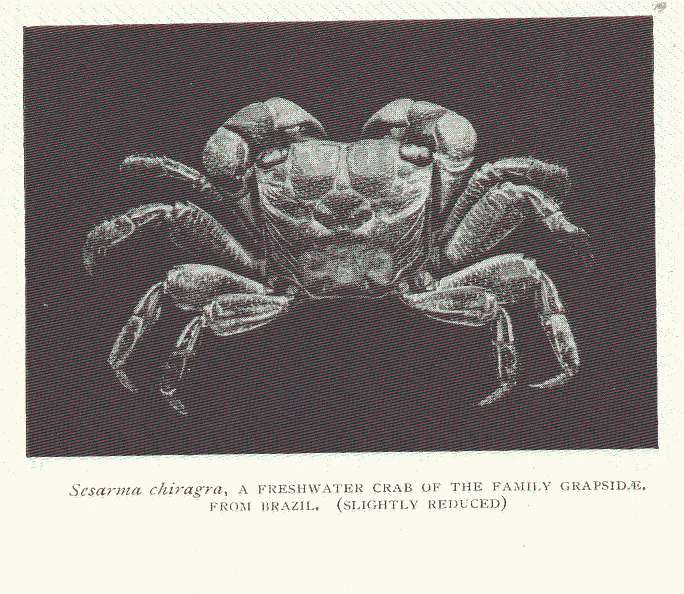
Photo: William Thomas Calman, Public domain, via Wikimedia Commons
Crabbing has a reputation problem. In the popular imagination it involves a bucket, a line, a bag of bacon and a rising pile of confused crabs. It can be a lot of fun. It can also be a small, useful lesson in restraint — the sort of afternoon where the best moment is not the catch, but the let-go.
That is the version worth aiming for with children. Not a haul, but a short loan. You borrow a crab from the sea for a few minutes, look at it properly, then put it back where it came from. Done well, a quayside crabbing session becomes marine biology with a bit of string attached.
Start with the spot, not the kit
Before you buy a line, find the right piece of quay. The ideal family crabbing spot has railings or a solid barrier, room to stand back from the edge, easy access to the water and no working boats trying to come alongside. Avoid ferry slips, fuel berths, fish-landing quays and anywhere with a “no crabbing” notice. Harbour authorities are not killjoys; they are usually protecting operations, wildlife or both.
Ask at the harbour office or check council notices before you rig up. Some places ask families to use drop nets rather than lines, some restrict crabbing to certain hours, and some quietly tolerate it as long as nobody leaves litter or blocks a gangway. Local byelaws matter, and so do marine protected areas. If a sign says no, that is the whole answer.
Safety comes before the first crab. Choose a quay with a rail, keep children within arm’s reach rather than simply in sight, and watch for algae, wet metal and loose stones. A lifejacket is not usually needed on a high quay, but it is never wrong near open water. If the edge feels uncomfortable, move on. There is always another harbour.
The kit that earns its place
The simplest setup is usually the best. A handline with a bait clip, a small bucket, a soft dip net, a towel and a bottle of drinking water will cover most family sessions. Skip hooks. Crabbing lines do not need them, and a hook turns a gentle afternoon into an accident waiting to happen.
For bait, frozen fish scraps or a little bacon are fine. Please do not prise live limpets off rocks to use as bait; frozen bait from a tackle shop or the fish counter does the job without taking anything from the shore. A small weight helps the line sink, but keep it light. You are trying to tempt a crab, not anchor a dinghy.
The bucket is for observation, not collection. Choose a modest one, half-fill it with clean seawater from the spot, and keep it in the shade. A dry bucket in full sun is a grim place for a crab. If you are bringing a net, make sure it is soft mesh and check it for holes before you start.
Tide, wind and the ten-minute rule
Crabs are not obliged to perform. Some days they queue up; other days they ignore the finest bacon in the harbour. That is part of the lesson. A moving tide often feels more promising than slack water, and a little colour in the water can help, but nothing is guaranteed. Check the tide table before you go. A big spring tide can turn a low quay into a washing machine, while a gentle neap tide is often easier with small children.
Wind matters just as much. An onshore breeze can push chop against the harbour wall and send spray over the edge. Wind against tide makes things lumpier still. If white horses are building outside the harbour mouth, pick another day or another spot. Calm, sheltered water is not just more comfortable; it is safer and easier to see what you are doing.
Then apply the ten-minute rule. Give it ten minutes. If nothing is happening, look at the water instead. Count the jellyfish, watch the shags drying their wings, notice how the light changes on the pilings. Crabbing is a pretext for sitting by the sea with a purpose, and the purpose does not have to be a bucket full of crabs.
Handling a crab without making it a drama
When a crab does arrive, lift it gently in the net rather than swinging it over the wall on the line. Tip it into the bucket with as little handling as possible. If you need to move it, use the net or a soft brush, not fingers. Crabs have claws for reasons, and children have fingers for keeping.
Keep the bucket shaded, do not overcrowd it, and change the seawater if it starts to look cloudy. Fresh water is harmful to crabs, so do not top up from a tap. Keep the bucket out of the sun while you eat your sandwiches. A crab out of water is holding its breath; a short look is fine, a long imprisonment is not.
This is also the moment for hand-washing. Sea water, bait and harbour surfaces are not sterile. A bottle of drinking water and some hand gel should be part of the kit, and children should wash before they eat. It sounds dull, but it is the difference between a good memory and a bad stomach.
The let-go is the point
Release your crabs where you found them, and do it sooner than you think. Lower the bucket or net back to the water and let them scuttle off. Do not tip them from a height, do not move them to a different harbour, and do not release them into a rockpool where they would not naturally be. A crab belongs to its patch.
If you have caught a berried female — one carrying a sponge of eggs under her tail — put her back immediately. She is the future of the local population. The same goes for very small crabs and anything you cannot identify. Catch-and-release is not a consolation prize; it is the whole ethic. The fewer crabs you hold, the more you notice about each one.
A useful family rule is “one crab, three minutes, one release”. Catch one, look at it, talk about its shell colour and the way it moves, then put it back. If another child wants a turn, the first crab goes back first. No crab spends the afternoon in a bucket while everyone else has a go.
A quieter scorecard
Instead of counting crabs, count what you notice. How many different shell colours did you see? Did any crab have a barnacle passenger? How fast did it move when it was released? Did the tide turn while you were there? This turns the session from a contest into a watching game, and it gives children something to report that is not just a number.
Pack up properly, too. Take home every scrap of bait, line and litter. Check the line for tangled loops before you leave. Leave the quay as you found it, or better. The next family will thank you, and the harbour will keep tolerating the gentle version of this old seaside habit.
Crabbing with children does not need to be a haul. It needs a line, a bucket, a bit of shade and a willingness to let go. That is the short loan. The sea gets its crab back, and your family gets an afternoon it will actually remember.