Walls, Steps and Salt Water: Nine UK Sea Baths Worth Planning a Day Around
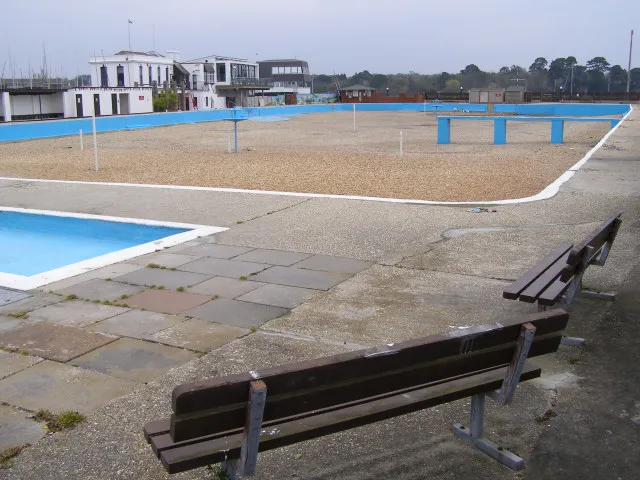
Photo: Jim Champion, CC BY-SA 2.0, via Wikimedia Commons
There is a lovely middle ground between a chlorinated leisure pool with a wave machine and a full-blown wild swim off a rocky Scottish headland. It is the seawater lido and the tidal pool: real salt water, real weather, real seaweed — but with a wall around you, steps to get in, and a decent chance of knowing exactly how deep it is.
We have come to think of it as controlled wildness, and it suits families beautifully. Children get the slap of cold water and the thrill of a pool that is not quite tame; parents get an edge to watch, a place to leave the towels, and a much shorter list of things that could go wrong.
A note before you plan: almost everything below is seasonal, charity-run or weather-dependent, and several are free with a donation box. Check opening times and tide windows on the day before you drive anywhere.
1. Jubilee Pool, Penzance, Cornwall
The grande dame of British sea bathing: a triangular art deco lido opened in 1935, sitting right on the promenade with the sea slapping its outer wall. The main pool is unheated seawater and bracingly cold — think 11–13°C for much of the year — while the separately booked geothermal pool sits in the low thirties and has quietly become the most family-friendly way to introduce a nervous child to cold water.
Access and parking: a ten-minute walk from the town and the station; the harbour car park is the obvious choice. Tides: irrelevant once you are in, which is the whole point. Ages: shallow shelves and ladders make it work for confident five-year-olds upward; there are lifeguards on duty in season.
2. Bude Sea Pool, Cornwall
Tucked into the rocks below the cliffs at Summerleaze, this 1930s pool is free, charity-run and fills and empties with the Atlantic. It is at its best on a mid to high tide, when there is depth enough to actually swim; at low water it becomes a shallow, rocky paddle. The walk down from the car park is a slope, not a scramble, which matters if you are carrying a cool bag and a reluctant toddler.
Temperature: warmer than the open sea but only just — expect low teens in late summer. Ages: steps at one end and a shallow end make it genuinely good for primary-age children, and the main beach next door has lifeguards in season.
3. Shoalstone Pool, Brixham, Devon
A proper local treasure on the Berry Head side of the harbour: a free seawater lido cut into the rocks, filled by the tide, run by volunteers. It is small, sociable and unpretentious, with a shallow end and a deep end and a set of railings that parents of small children will appreciate.
Tide window: the key detail. Arrive too late in the ebb and there is not enough water to swim; the pool needs a decent high tide to top itself up. Parking: the Breakwater car park is the nearest realistic option, then a short coastal walk. Ages: good for paddlers, but there is no lifeguard — keep a hand on the little ones.
4. Tinside Lido, Plymouth, Devon
Another 1935 art deco classic, this time perched on the Hoe with a full view of the Sound and Drake's Island. Saltwater, seasonal (broadly late May to September), ticketed, and gloriously photogenic. The deep end is a proper three metres, which is worth knowing before you let an overconfident eight-year-old loose.
Practicalities: parking on the Hoe fills fast in August; the children's pool and sunbathing terraces make it an easy half-day. Tides: not a factor — it is a lido, refilled and treated, which makes it the least weather-dependent option in the South West.
5. Clevedon Marine Lake, Somerset
A Victorian marine lake on the Severn Estuary, free to use and topped up through a sluice on big tides rather than every single high water. That quirk is part of its charm and part of the planning: check the refill schedule before a long drive, because a neap week can leave it lower than you would like.
Water: silty, shallow at the edges, and popular with paddleboarders and kayakers, so keep an eye out. Parking: Salthouse Fields, pay and display, a minute from the water. Ages: fine for families, but there is no lifeguard — buoyancy aids for weaker swimmers are sensible.
6. Tunnels Beaches, Ilfracombe, Devon
You reach the beach through four hand-carved Victorian tunnels, which is roughly ninety per cent of the appeal for anyone under twelve. Below, a sheltered beach has a series of tidal pools that fill and drain with the sea — best explored on a falling tide and in the couple of hours either side of low water.
Cost and access: there is an entry fee, and the walk down involves steps, so leave the pram in the car. Ages: excellent for rockpooling families; the tunnels are a bit much for anyone uneasy in enclosed spaces.
7. Walpole Bay Tidal Pool, Margate, Kent
A vast chalk pool built in 1937 and flooded by each high tide — one of the biggest of its kind in the country, and free. It is deep in places, with a rough chalk floor, and it has a devoted year-round cold-water following.
Access: a clifftop walk from Palm Bay with steps down. Safety: no lifeguards, so treat it as a serious swim spot rather than a paddling pool — older, competent swimmers get the most from it, with younger children kept close in the shallower margins. Tide: the fill and drain times dictate everything.
8. Gourock Outdoor Pool, Inverclyde, Scotland
Heated seawater in an open-air pool on the Firth of Clyde, with the hills across the water and a temperature that hovers around a genuinely comfortable thirty degrees in season. Open roughly May to September, ticketed, and a brilliant option for a Scottish trip where the coast is magnificent but the sea is not remotely inviting to a seven-year-old.
Practicalities: on-street parking nearby, a short walk from the station, and tides entirely irrelevant.
9. The Trinkie, Wick, Caithness
Saved and restored by locals, the Trinkie is a seawater pool blasted out of the rocks south of Wick in the 1930s — free, exposed, utterly splendid and entirely at the mercy of the sea. It is the wildest entry on this list by a distance.
Tide window: essential, not optional. It fills on the flood and empties on the ebb. Ages: confident walkers and swimmers only; the edges are rough, there are no facilities, and mobile signal is patchy. Bring everything you need and tell someone where you have gone.
Tidal pool etiquette and safety
Tidal pools are shared, living spaces and they behave differently from a lido. A short briefing before the first dip goes a long way.
- Know the fill and empty times. A pool that is ankle-deep at noon can be chest-deep by four. Watch the exit as carefully as the entrance — the steps you came down may be underwater on the way back.
- Treat algae like ice. Weathered stone and green weed are genuinely slippery; water shoes and a slow shuffle beat speed every time.
- Buoyancy aids for weaker swimmers, and no inflatables in tidal pools — the wind does not care that there is a wall.
- Cold water is the main hazard, not depth. Short dips, enter slowly, warm layers and a flask waiting on the wall.
- Nothing goes in the water but you. No soap, shampoo or sun cream applied at the edge; these pools exchange with the sea.
- Leave the rocks and wildlife alone. Limpets, anemones and the odd crab are part of the deal. Shuffle your feet in warm shallows in high summer, mostly to discourage weever fish.
- No lifeguards means your plan is the safety net. Buddy up, set a meeting point, and remember that 999 and ask for the coastguard works on any coast in the UK.
Finally, a word on the practicalities that catch people out: summer parking in Cornish and Kentish seaside towns can cost more than the swimming, several of these pools close entirely outside the season, and the best tide window rarely coincides with lunch. A flask, a dry robe and a flexible attitude are the real kit list.