The Beach Is the Classroom: A Shore-First Case for UK Coastal Holidays
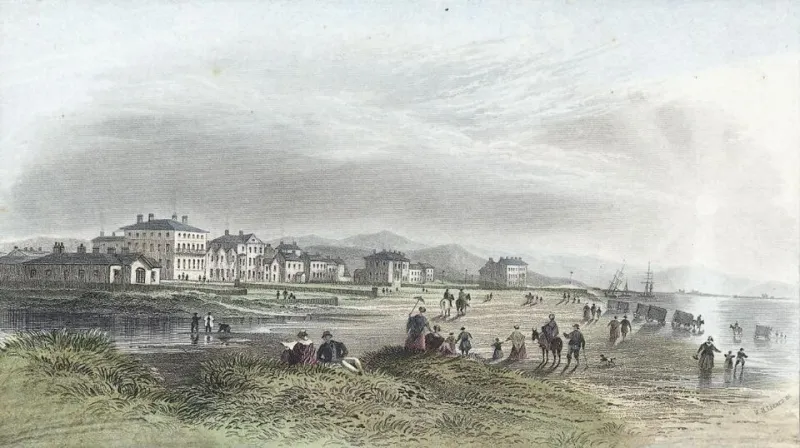
Photo: William Home Lizars, CC0, via Wikimedia Commons
There is a quiet assumption in many UK family holiday plans: if you want a proper sea adventure, you need to get on the water. Book the wildlife cruise. Bag a seat on the ferry. Find a boat trip with a skipper who knows where the seals are. All of that can be brilliant. But it is not the only route to sea confidence, and it is not always the best one for young families.
At Waterwise Marine, we think the shore deserves more credit. A beach day built around the tide can teach children how the sea works, how to stay safe near it and why marine life needs space. It can also cost less, work better around naps and weather, and leave everyone with a deeper sense of place than a two-hour dash across the waves.
This is the case for shore-first holidays: start on dry land, learn the rhythms of the coast and let boat trips come later if they fit.
The Boat Trip Assumption
Boat trips are not the enemy. A short ferry crossing can be a wonderful first taste of the water, and a well-run wildlife trip can show families things they would never see from the beach. But a boat is a contained experience. You are a passenger in someone else's plan, subject to their timetable, the sea state and the weather.
For a child, that can be exciting. It can also be overwhelming. The engine is loud, the deck moves, the lifejacket feels strange and the wildlife may be a distant speck. None of that is wasted, but it is not the same as learning to read a beach.
A shore-first holiday flips the order. Instead of treating the beach as a waiting room for the boat, it treats the beach as the main event.
What the Shore Teaches That a Deck Cannot
A beach teaches tide sense. Children can see the waterline move, mark the high-water line and understand why a cove that was open in the morning is cut off by afternoon. They learn that the sea is not a backdrop; it is a moving system with its own schedule.
It teaches weather sense. Wind on the sand, spray over a wall and cloud building offshore all become real rather than abstract. A family can talk about why the sea looks choppy today and why that matters for tomorrow's plans.
It teaches boundaries. A parent can say: this is how far you go, this is where we turn back, this is the signal to come in. Those rules are easier to practise on a beach than on a moving deck.
And it teaches ecology without a worksheet. Rockpools, strandlines and harbour walls are full of living things. A child who has spent an hour watching a crab shuffle under weed is more likely to care about protecting the sea than one who has only seen it through a window.
A Shore-First Framework for Families
A shore-first holiday does not mean banning boats or turning every day into a field trip. It means using the coast as a curriculum and letting the water come later.
1. Choose a tidal base
Pick a place with a beach that changes shape with the tide, plus a harbour or rocky shore within walking distance. A base with a tide table on the wall and a short walk to the sea makes it easy to build the day around the water rather than the clock.
2. Plan around the tide, not the clock
Look at the tide before you look at the attractions. A falling tide might be the perfect window for rockpooling or a long beach walk. A rising tide might be the time for a harbour wall, a promenade or a picnic above the waterline. Keep the plan flexible.
3. Pack for the shore
Wellies or grippy shoes, waterproofs, layers, sun cream, water and a small first-aid kit cover most British beach days. Add a tide table, a magnifier and a camera. You do not need a boat to have a kit list.
4. Use a simple daily rhythm
Start with a look at the tide and weather. Then choose one shore activity: a rockpool wander, a beachcomb, a harbour watch or a walk to a viewpoint. Leave space for a second look later in the day. Children learn more when they revisit the same patch of coast and notice what has changed.
5. Try the three-look rule
Look at the sea. Look at the shore. Look at each other. The sea tells you about conditions, the shore tells you about access and hazards, and your family tells you whether everyone is warm, fed and still having fun. If any of those looks wrong, change the plan.
6. Build a skills ladder
Start with shore days. Add shallow-water paddling in a lifeguarded spot if conditions are right. Then consider a short, sheltered boat trip with a reputable operator. Confidence grows in steps, not in one big leap.
Harbour Spotting Without a Ticket
A working harbour is a free marine classroom. Children can watch boats launch, ferries load and fishermen sort gear. They can learn why lifejackets matter, why harbour walls are not climbing frames and why you never stand in the way of a moving vehicle or a swinging load.
Keep back from the edge, obey signage and do not enter areas marked private. If a harbour master or crew member asks you to move, move. That is part of the lesson too.
Beachcombing With a Conscience
Beachcombing is another shore-first staple, but it needs a light touch. Take photos of interesting finds. Leave driftwood, shells and seaweed where they belong, especially in protected areas. Never take live creatures home, and check local rules before pocketing anything.
When a Boat Trip Still Makes Sense
After a few shore-first days, a boat trip can be the icing on the cake. Choose a short crossing or a sheltered trip, check the operator's safety record and make sure lifejackets are provided and worn. Ask about sea conditions and be willing to cancel if the weather turns. A good operator will respect that decision.
The point is not to avoid the water. The point is to arrive at it with better judgement.
The Payoff
A shore-first holiday gives families something a packed excursion cannot always deliver: time. Time to watch the tide, time to ask questions, time to get cold and go back for chips. Children who learn the beach in this slow way tend to become more cautious, more curious and more capable around the sea.
That is sea confidence. It starts with sandy boots, not a boarding pass.