Before the Boot Opens: Seven Quick Checks at an Unfamiliar UK Slipway
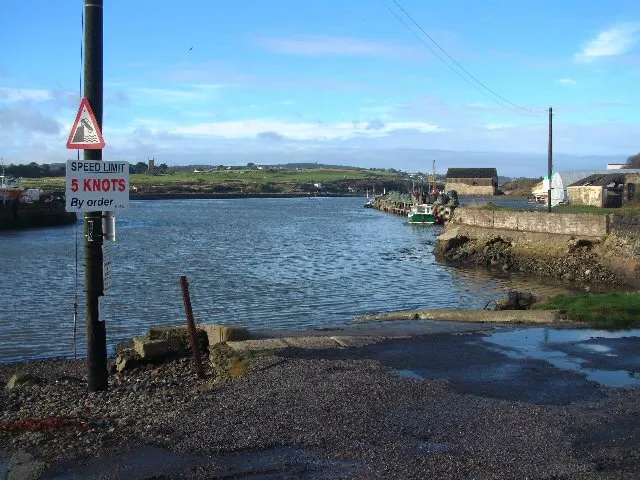
Photo: Bob Jones, CC BY-SA 2.0, via Wikimedia Commons
There is a particular kind of optimism that comes with pulling into an unknown coastal car park. The sea is right there, the children have spotted gulls, and everyone is already reaching for the door handle. It is also the exact moment when a little restraint pays off. A slipway, ramp or beach access lane can look perfectly ordinary from the driver's seat and then turn out to be steep, weed-covered, half-underwater or shared with a tractor. None of that is a disaster. It is simply information you want before the boot opens.
This is not about turning a family beach day into a risk assessment. It is about giving yourself two or three minutes to read the place. Think of it as the arrival version of checking the flags and the tide: quick, repeatable and much easier than trying to reverse a loaded car up a slippery ramp while someone is asking where the crisps are.
Start with the slope, not the sea view
Stand at the top of the slipway and look down it properly. Is the gradient gentle enough that a child carrying a bodyboard can manage it? Does it flatten out before the water, or does it keep going? Concrete can be deceptive: dry at the top, slick at the bottom, and often steeper than it appears when you are looking through a windscreen.
On UK shores, old harbour slipways are often built for boats rather than family hatchbacks. That means narrow ramps, sudden drops and edges without much warning. If the slope looks like a place where a trolley would run away from you, treat it as a carrying route rather than a wheeling route. It is also fine to decide that the beach further along is the better bet.
Look for green, black and shiny patches
Weed, algae and wet leaves are the usual suspects, but also watch for diesel sheen, loose gravel and patches of sand washed across concrete. Green does not always mean slippery, and black does not always mean safe; the point is to notice. A slipway that is dry and gritty at 10am can be a different creature after a tide has washed over it and the sun has dried it just enough to look harmless.
If you are unloading children and kit, choose the flattest, cleanest patch you can find, even if it means carrying everything a few extra metres. Better a short walk than a cartoon-style pile-up at the water's edge.
Check the tide against the access point
This is the check that changes the day. Is the tide coming in or going out? Is the slipway already wet? Are there fresh strandlines higher up the beach that show where the water has recently been? A ramp that is dry now may be underwater in an hour, and a beach that looks enormous at low water can shrink surprisingly fast.
Before anyone takes off their shoes, agree a dry line. It might be the top of the slipway, a row of rocks or the far side of the car park. The rule is simple: if the water reaches that line, we move. Children understand clear boundaries far better than vague warnings.
Give yourself room to turn around
Unloading is only half the job. You also need to leave. Check whether there is space to turn a car without reversing blindly towards a wall, a harbour edge or someone else's picnic. If the access point is busy, consider parking properly and walking the kit down rather than treating the slipway as a lay-by.
This matters at compact harbour slips in places such as Whitby, Craster or the smaller Pembrokeshire coves, where the road, the ramp and the quay can all occupy the same few metres. A little patience at the top saves a lot of shuffling at the bottom.
Use the handrails and edges as information
A handrail tells you something: the people who built or maintain this access point thought it needed one. Use it, especially with younger children, and check whether it is continuous or stops halfway down. Look at kerbs, bollards and low walls too. They can be useful markers for children to hold or stand beside, but they can also be trip hazards when everyone is carrying something.
If there is no handrail, keep children on the uphill side of you and take the ramp slowly. There is no prize for a speedy descent.
Pick an escape route and a meeting point
Before the buckets come out, point to a obvious meeting spot: the car, the top of the slipway, a particular bench or the harbour wall. Then walk the route back up together. This is especially useful on beaches with multiple access points or harbour walls that look alike. A child who knows where to go if they lose sight of you is calmer, and so are you.
On bigger strands such as Bantham in Devon or Beadnell in Northumberland, the quickest way off the beach may not be the way you came down. Check the nearest dry exit and make sure everyone knows it.
Ask the one question before the boot opens
Here it is: if the tide came in now, where would we stand?
Ask it out loud. The answer tells you whether you have chosen a sensible base, whether the slipway is a safe retreat and whether the children understand the plan. It also gives you a natural moment to check the local signage, the harbour noticeboard or the tide table on your phone. If the answer is not obvious, move the base uphill before you unload a single bag.
A good arrival check does not take the fun out of a beach day. It protects it. The sea is going to do what it always does, and the slipway will still be there when you come back with sandy feet and a car full of damp kit. A couple of minutes at the top means you can spend the rest of the day looking at the water rather than worrying about the way back up.